

Hello friends and colleagues.
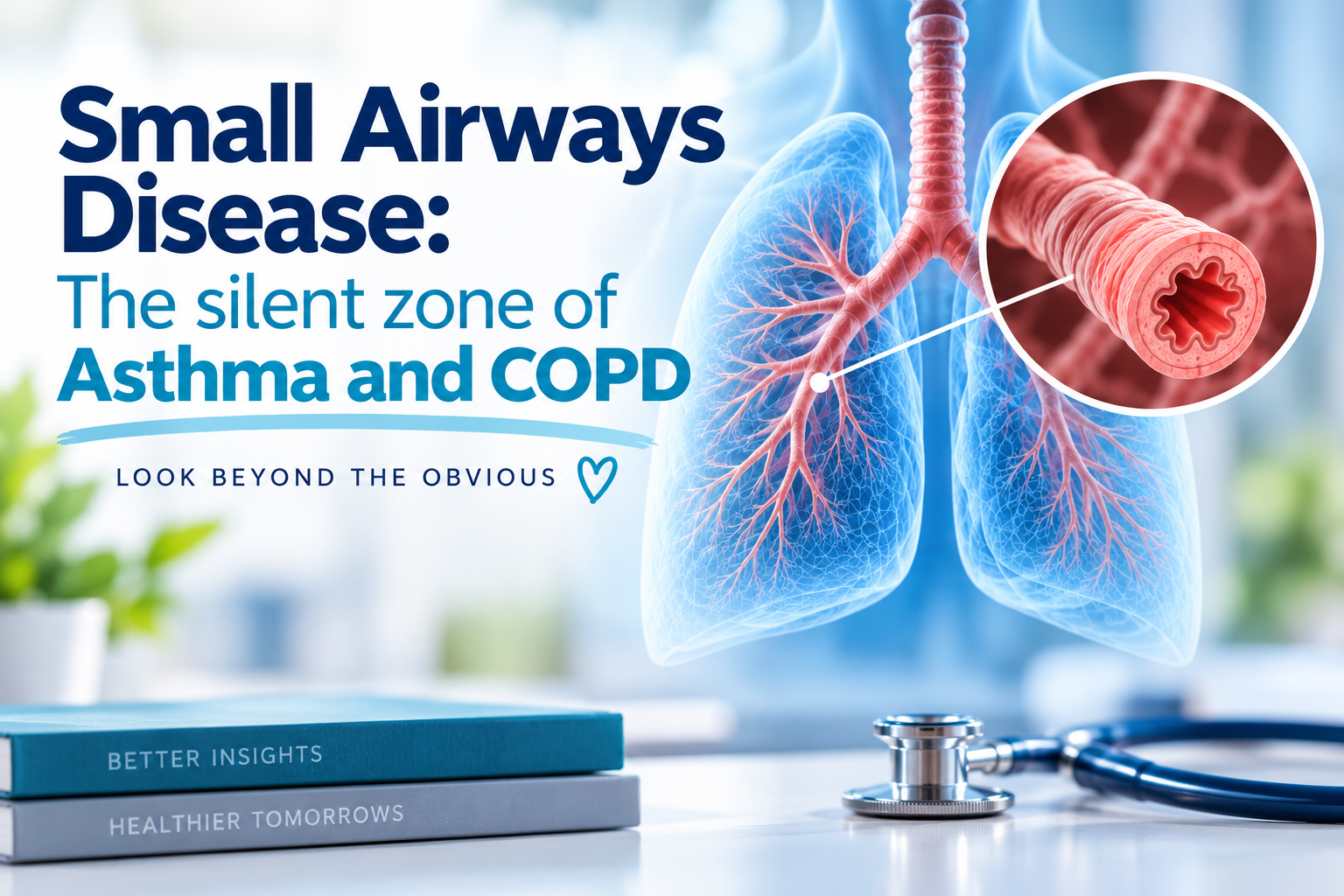
Lately, I have been doing a lot of presenting and reading around the impact of the small airways in Asthma and Chronic Obstructive Pulmonary Disease, and it has really made me question whether we give this enough consideration in day-to-day practice.
We know that small airways disease may affect up to 70% of patients with asthma and COPD across all stages of disease severity, yet much of this dysfunction can go undetected using traditional tests such as spirometry and peak flow. More advanced techniques, including impulse oscillometry (IOS) and multiple breath washout testing are not readily available in primary care, so this raises an important question — how do we identify small airways disease without access to sophisticated diagnostics?
For me, the answer is that we need to start thinking a little more broadly.
When patients are not responding to pharmacological treatment, perhaps we should resist the temptation to immediately escalate therapy and instead step back and ask what else may be contributing to poor control? Are there treatable traits that have not been addressed, such as co-morbidities, inhaler technique or non-adherence? Or could it be that the site of inflammation is simply not being targeted effectively with the current treatment regimen?
All of these factors, and many more, deserve careful consideration.
Having spent a lot of time recently exploring small airways disease, it is certainly something I will now be considering more often, particularly in those patients where achieving good control remains a challenge. Hopefully, this has given you something else to think about too.
Best Wishes, Michelle